Background & Challenge
Hushållningssällskapet Halland is on a mission to welcome everyone to the Swedish countryside. On the farm Lilla Böslid, they want to share the invisible, tiniest natural marvels among people from all walks of life. Because they believe that humans find happiness in micro-interactions with nature. However, not every visitor can experience these the same way due to their limited abilities.
For this reason, they want us to design an integrated experience primarily for children and others with different abilities, using physical touch and digital magnification to make the hidden details of the wetlands and farm exciting and accessible, but not overwhelming.
Team & Responsibilities
This was a group project of three people, Alireza, Dylan, and me, Manaj. We participated equally throughout ideation and brainstorming sessions. Nonetheless, we leveraged our individual strengths. For example, I worked with programming and graphic design software; Alierza helped me with programming, and he also worked in video direction; and Dylan worked on physical prototypes.
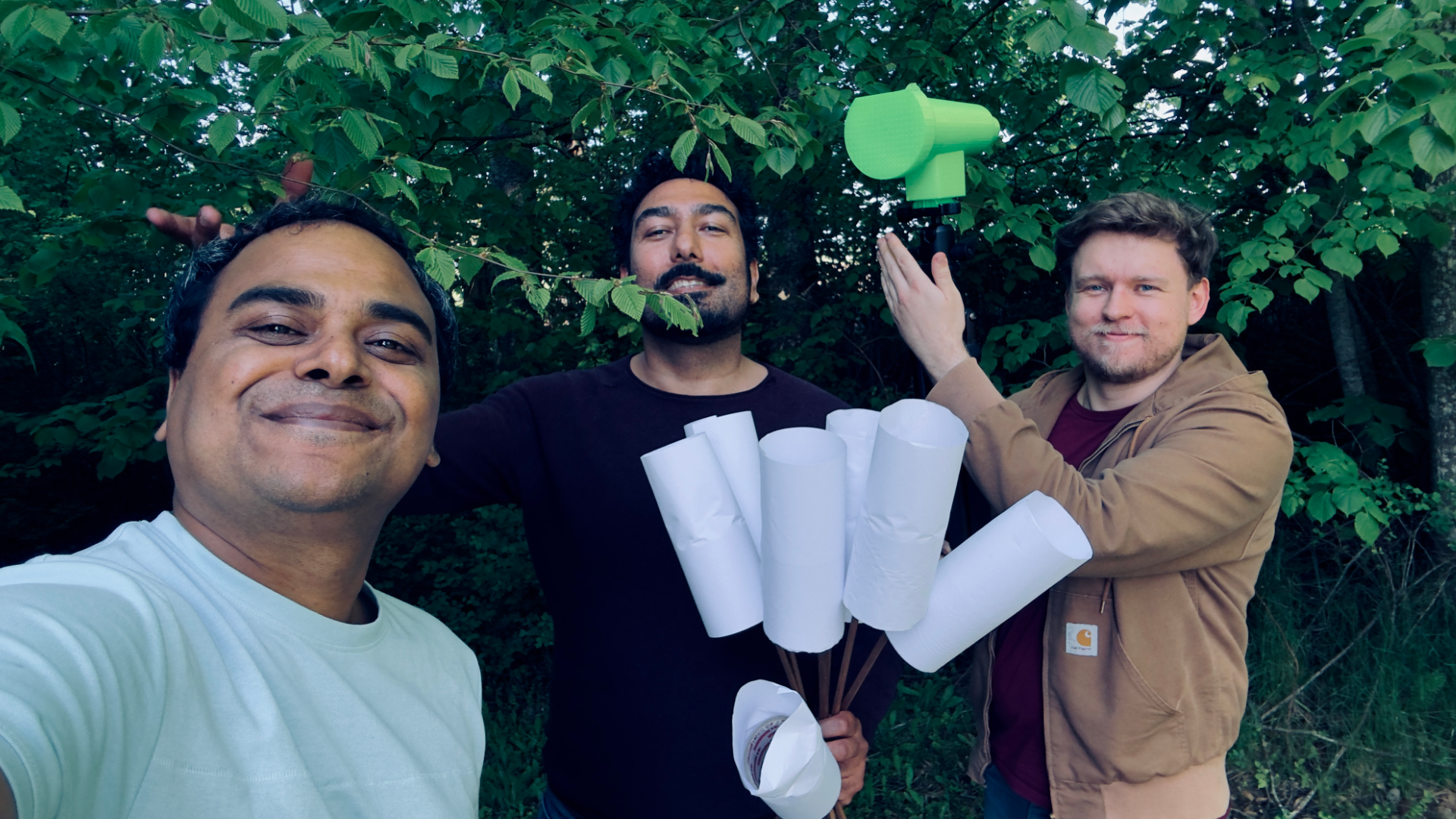
Every brainstorming session led to our decision through arguments. Since the beginning, we wanted to provide a solution that is immersive and educational. But through debating ideas, we could land on a fun and engaging solution.
Håkan was our contact person from the farm. We updated him with our preliminary plans, and with his opinion, we shaped our solution. We showed him three options, and we merged two based on his preference.
Research & Discovery
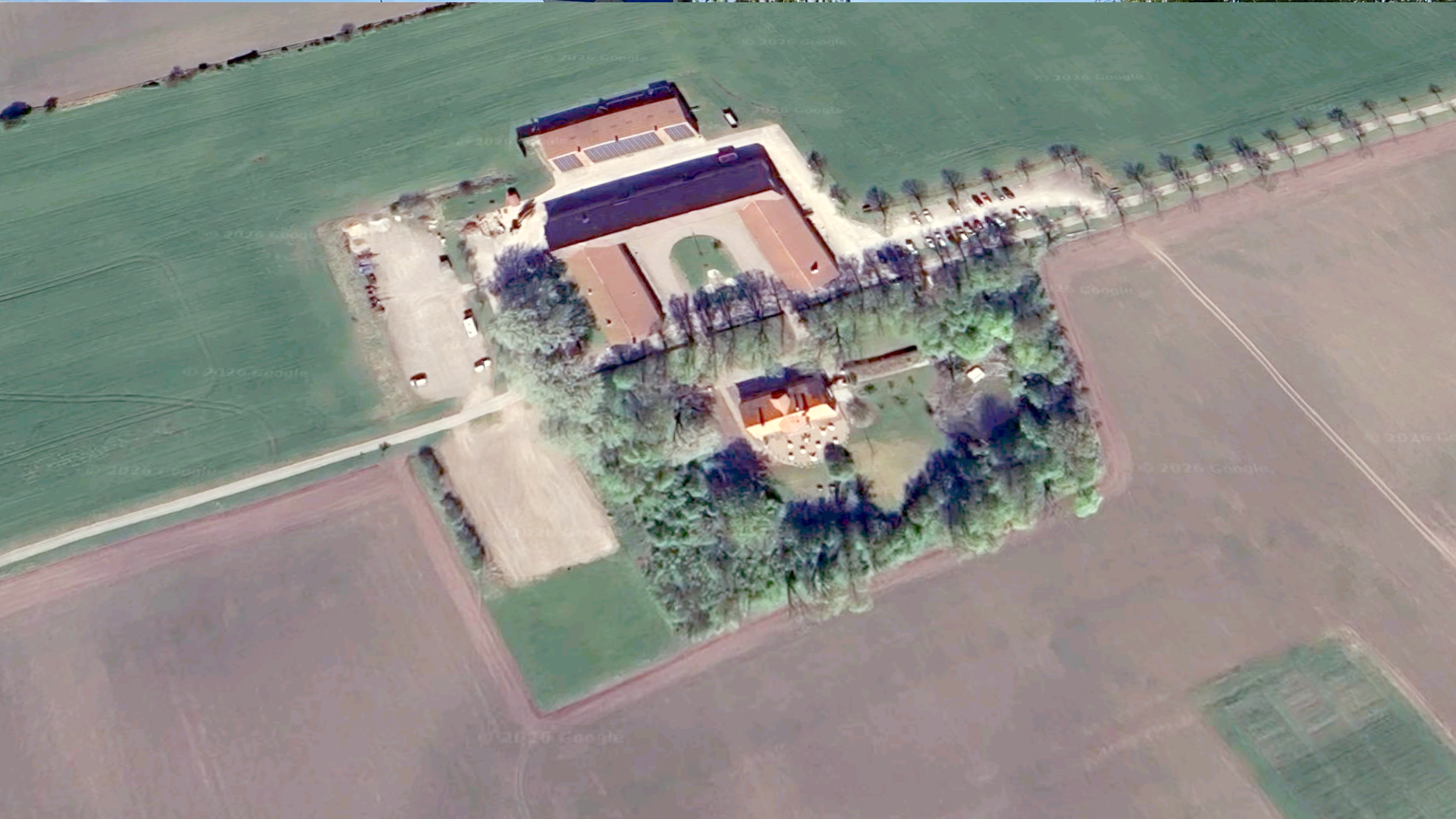
Our research started with a site visit. Lilla Böslid has several buildings, a restaurant, ponds, grassy fields, and jungle areas. It's a beautiful green space, and we took a lot of pictures. From this visit, we found:
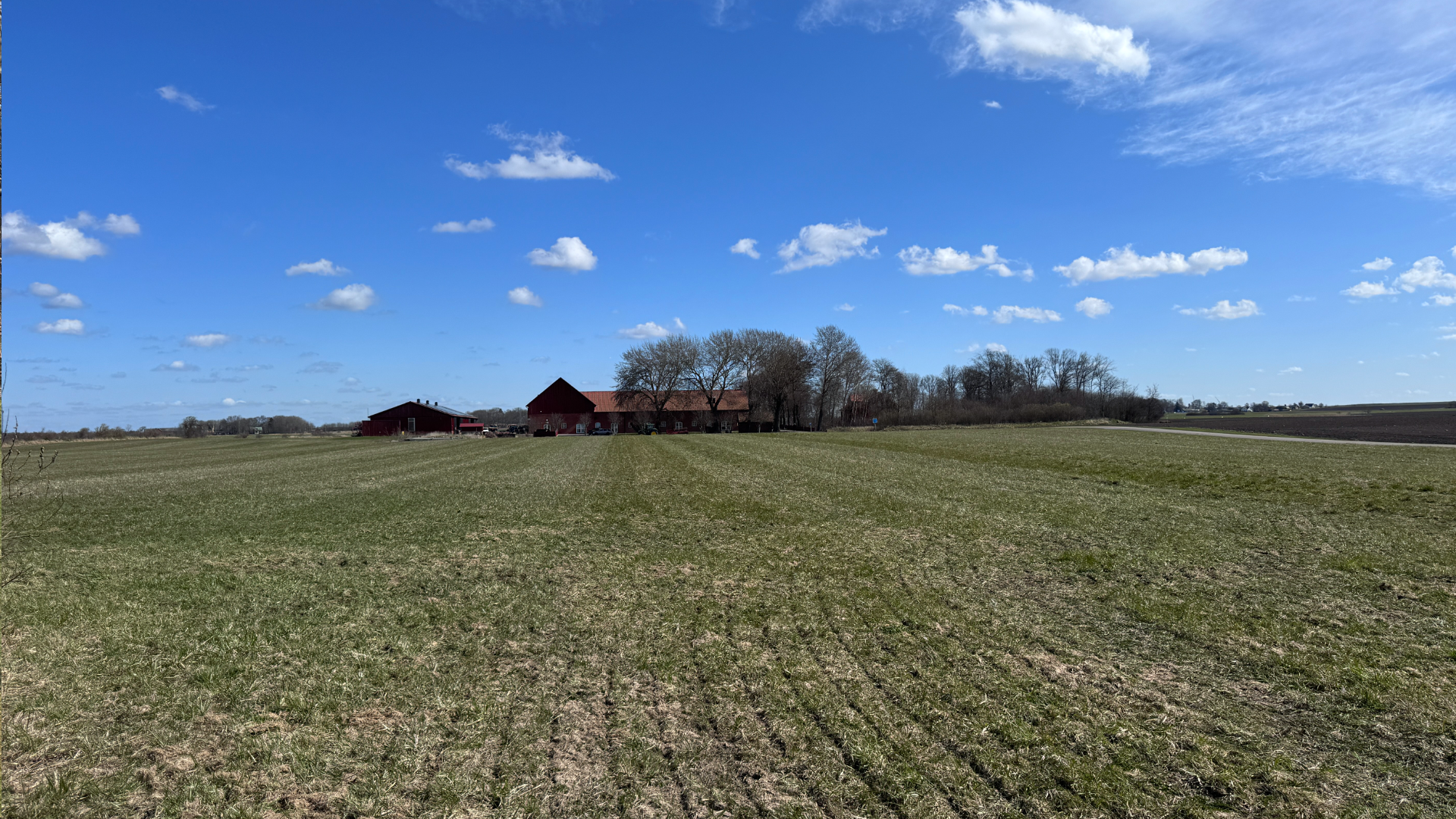
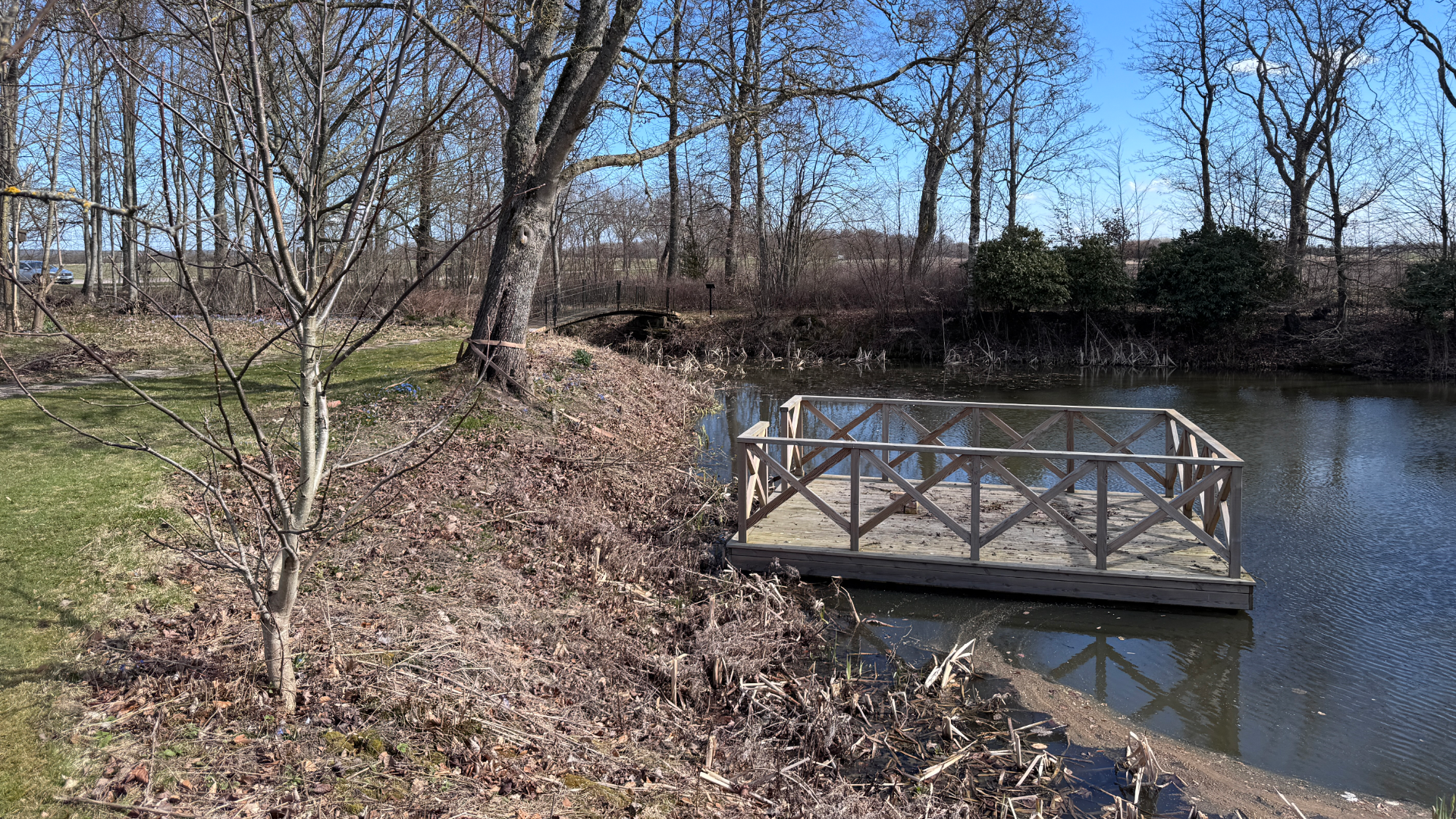
- The farm has sufficient space to host a big group of children for activities.
- It lacks animals.
- Finally, the landscapes in this space are varied.
After that, our next logical step was to find similar facilities and potential competitors. We found “Naturum Getterön”, a similar facility far from Halmstad, that offers extensive bird-related activities, such as watching and playing in structures shaped like birds. From their website, “We offer guided tours, lectures, a shop and a café with a fantastic view of the area. Downstairs we also have a family-friendly exhibition about bird life …”. From this desk research, we came to the conclusion that:
- They are more focused on education than on fun activities.
- They don't have any games and a few activities.
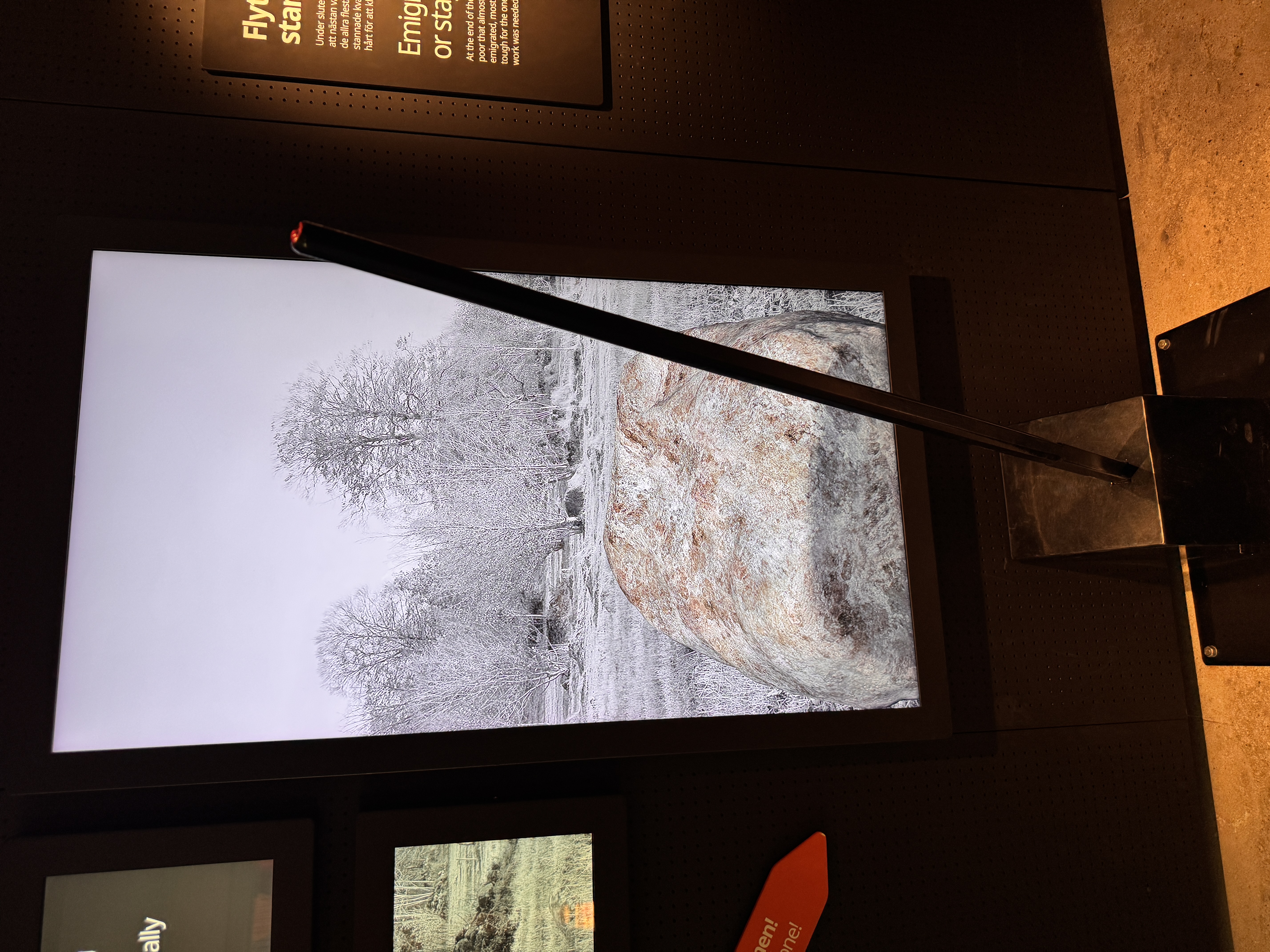
We wanted to learn more about mixed reality projects, so we visited the IKEA Museum to check it out. We were surprised to see that while there are so many things, like you can push a boulder in the screen using a lever, a group of children were playing some sort of tag and running and screaming. We understood that:
- Playing is more important for this group than experiencing something new. Although this was a very small sample.
- They prefer playing together when there is more than one person.
We failed to secure interviews with both children and teachers, acting as “proxies for users” from the different schools in the area. So we interview some children around the community informally. Before that, we also looked into popular games and AR-based experiences on mobile phones. We found an AR application that can place an animal in the room with a tap on the screen. We showed this to the children, and they were excited to see it. From this session, we found:
- Young children feel excited seeing animals.
- They like being in social or group activities, because one of the children was showing her sister's profile in the Roblox app that we tested.
- Finally, we also found that parents don't really like the idea of their children using mobile phones. Almost all of them have restrictions on phone use.
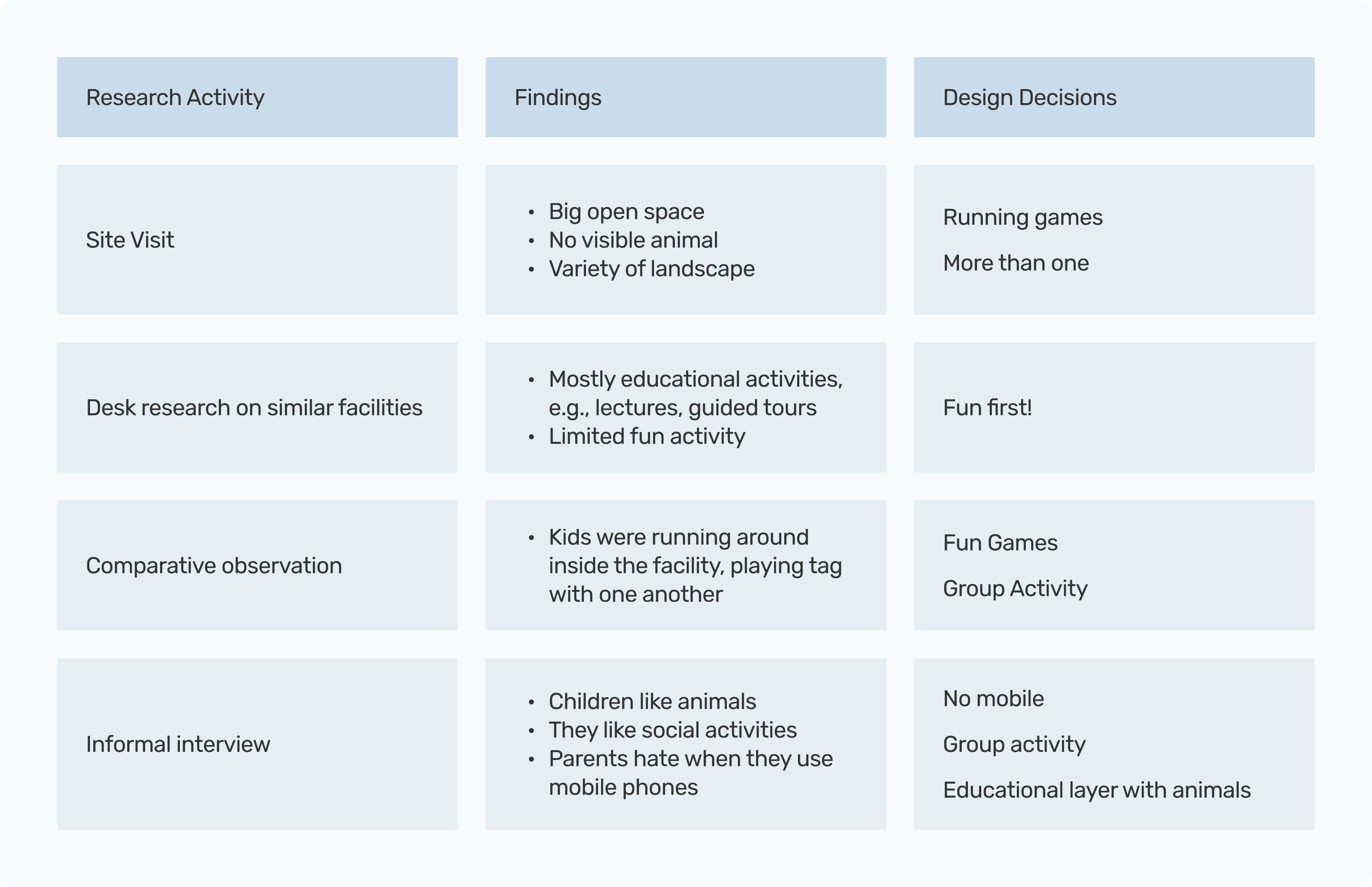
From the research findings, it became increasingly clear to us that we want a solution that's fun first, but we can’t give mobile phones to the audience at any point because that conflicts with the idea of visiting nature.
Concept Development
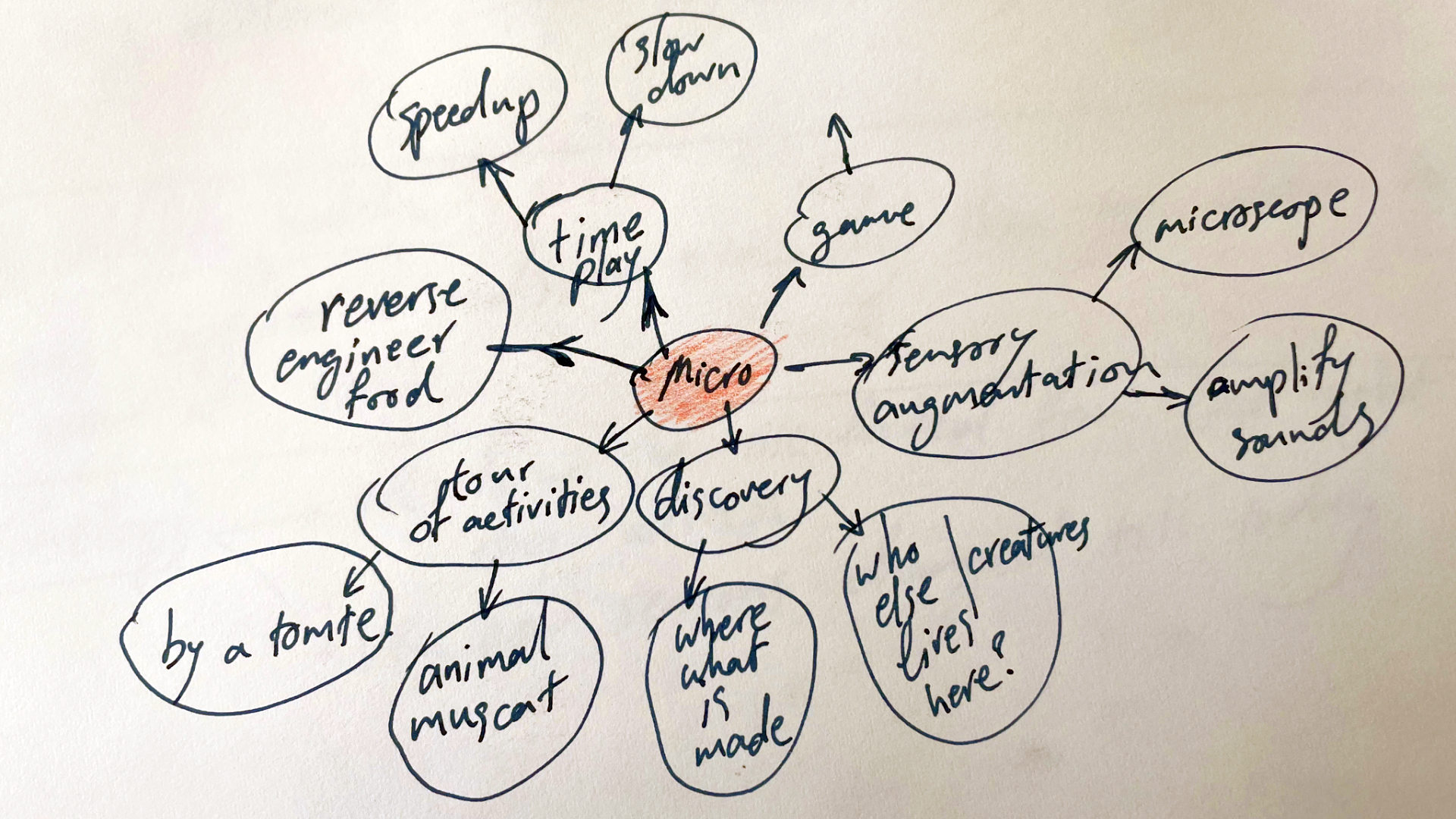
From the inception of this project, we were brainstorming ideas about using pseudoreality, like spyglass, to see seasonal changes, augmentation, like placing animals in the void using mobile phones, using sound to listen for the hidden life of the pond, and educational concepts like teaching farming. Based on our research, we decided to create a fun group activity that includes that one person behind the spyglass. There is only one, simple, outdoor, fun, familiar, and no-instructions-needed game like that: hide-and-seek.
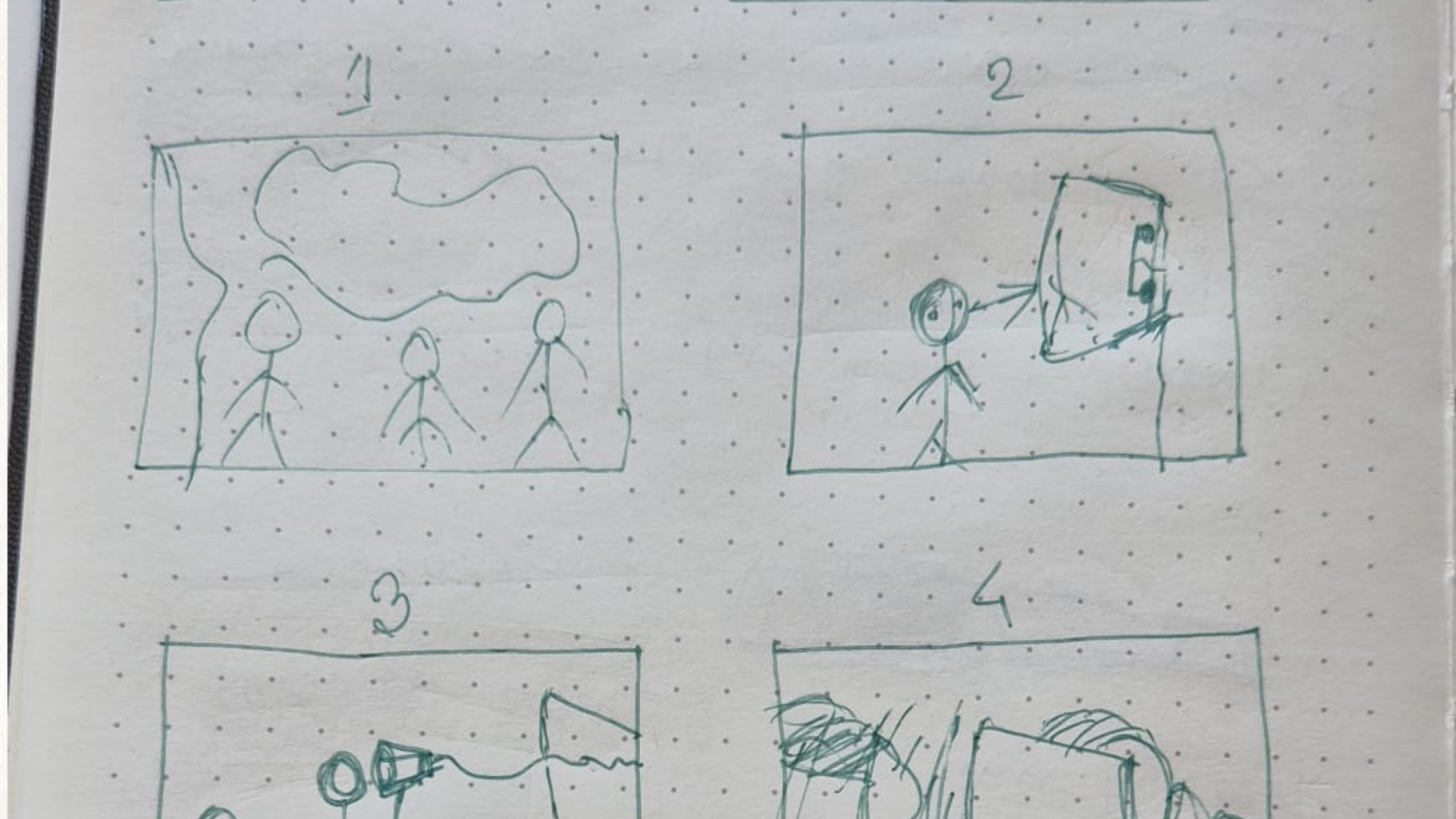
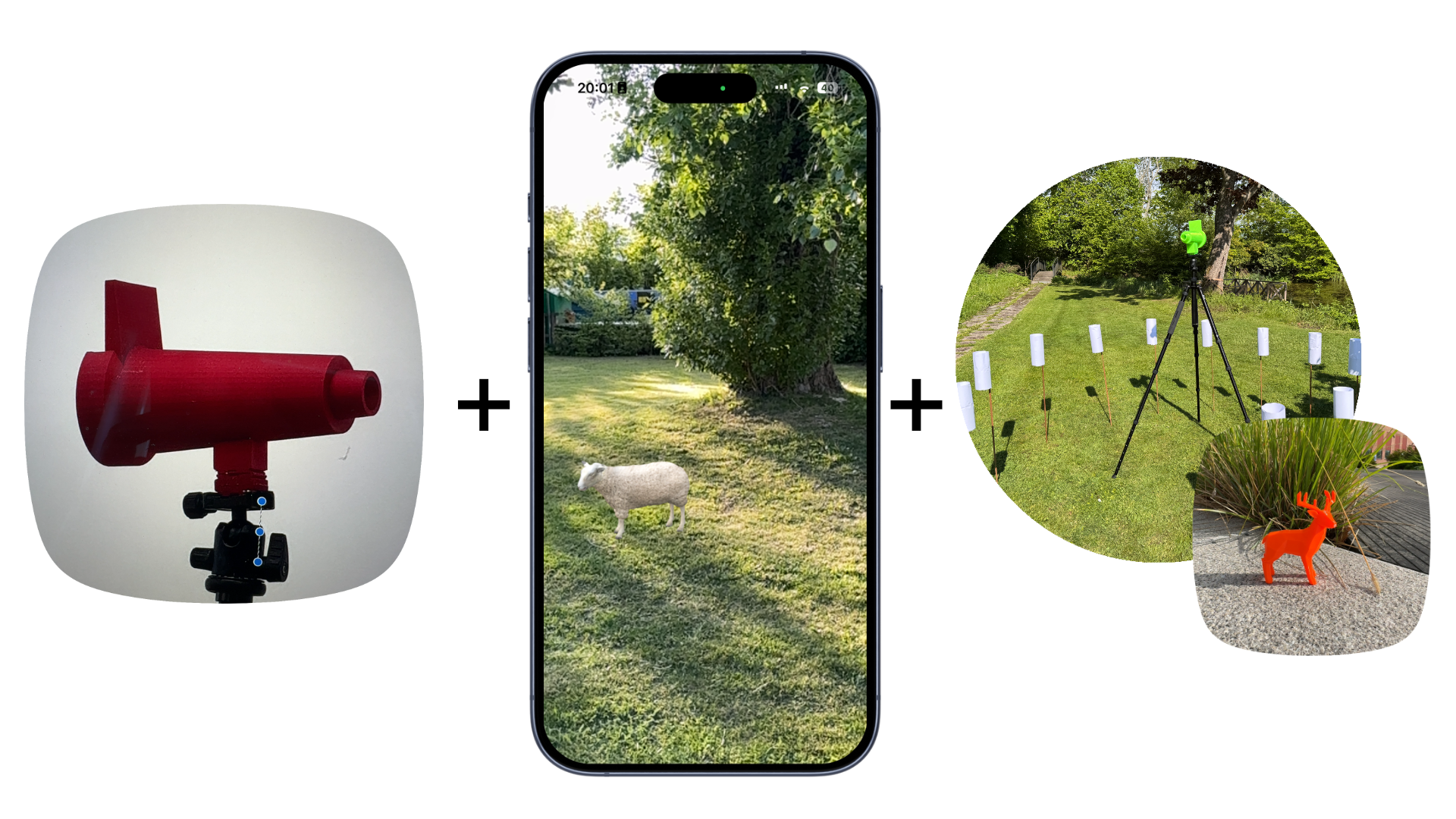
We transformed a common game of hide-and-seek into a game of hiding toy animals near a platform. The platform will have a spyglass to locate the animal, and there will be speakers on the platform that play sound clues to guide the animal's location. Once the observer finds it, they can show it to other people. And that way, each of them can take turns hiding and seeking it.
Design Process
Ideation
Our ideation process involved long brainstorming sessions. These sessions helped us think through the brief, research insights, and generate ideas. We documented these sessions through writing in the notebooks and maintaining Figma boards for each week. Later, we also utilized storyboarding to detail each idea. This helped us understand the user journey throughout the gameplay.
Prototyping & testing
We used prototypes at varying levels of fidelity to visualize our ideas. Starting from sketching on paper to a lo-fi prototype using cardboard. Each fidelity led us to the hi-fidelity prototype we delivered, whether it was a digital mobile application or a physical spyglass.
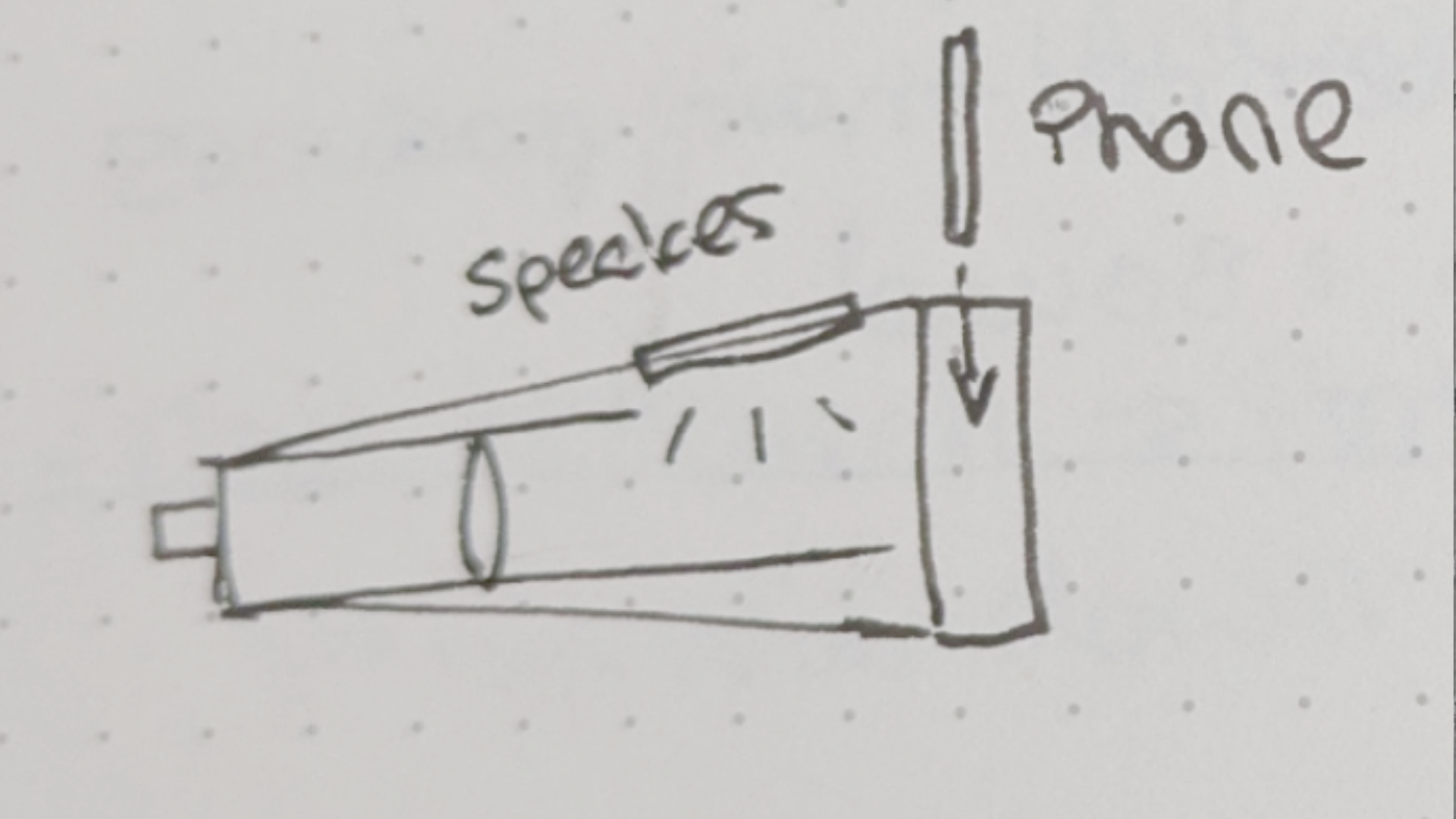
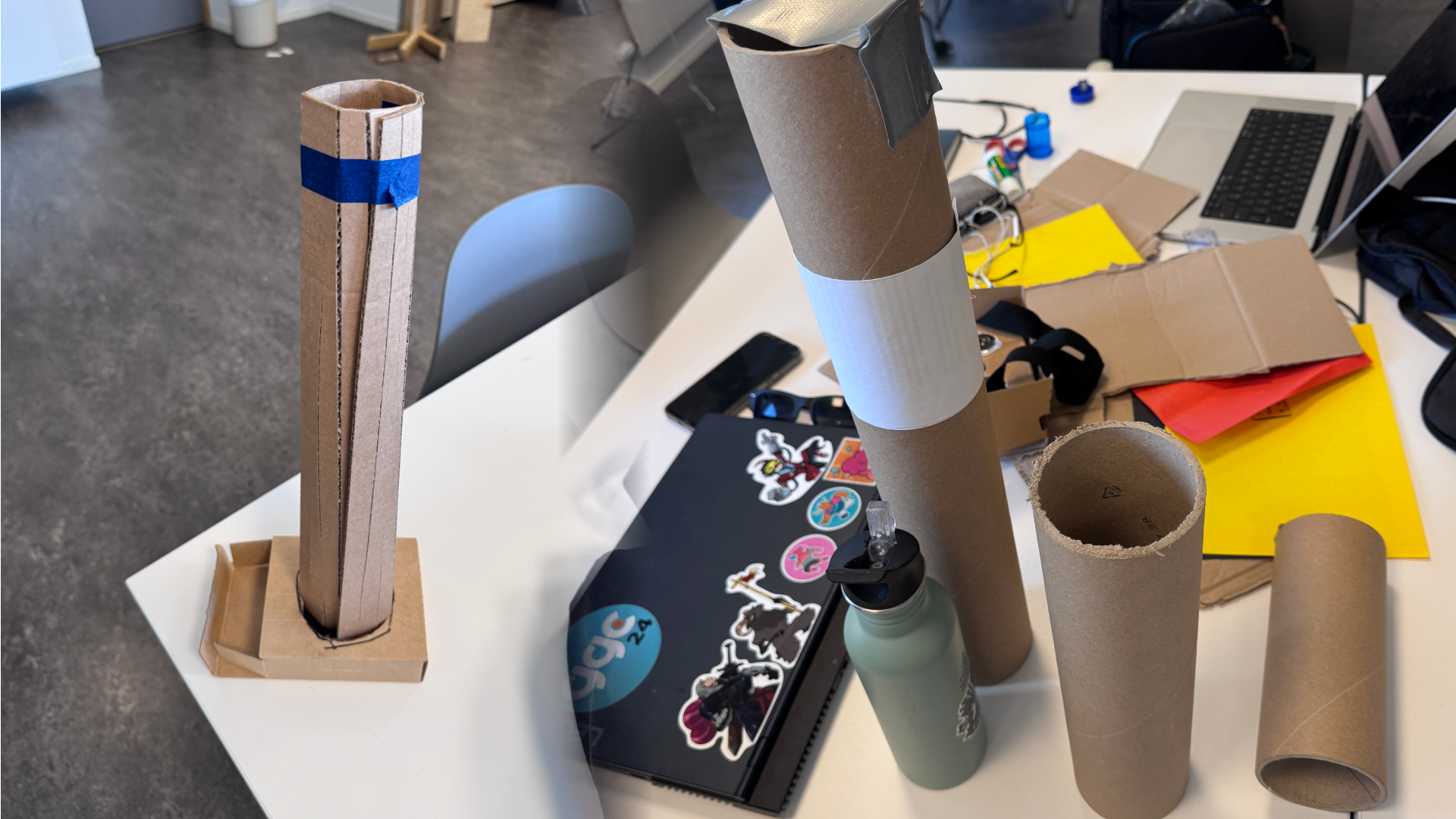
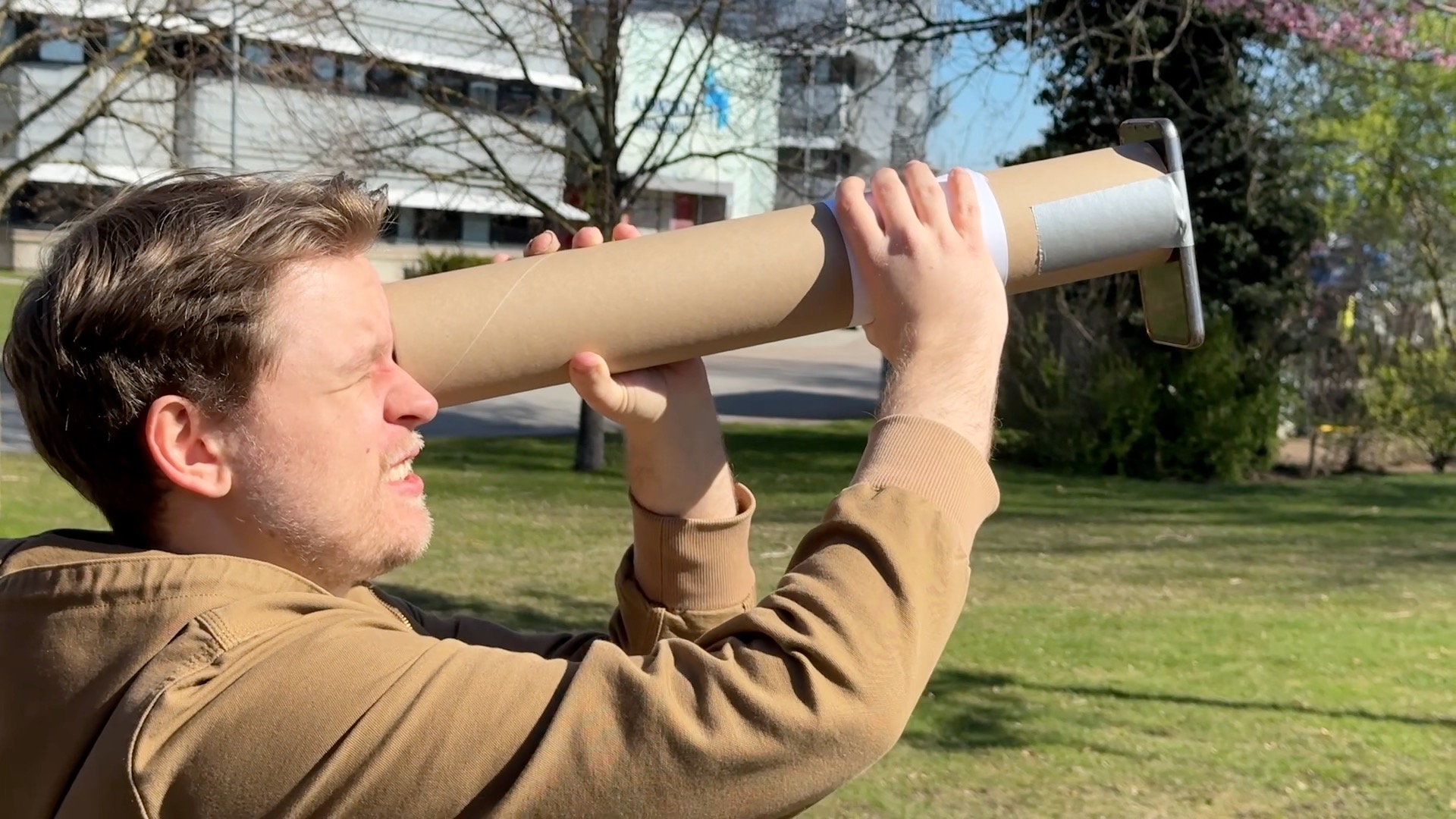
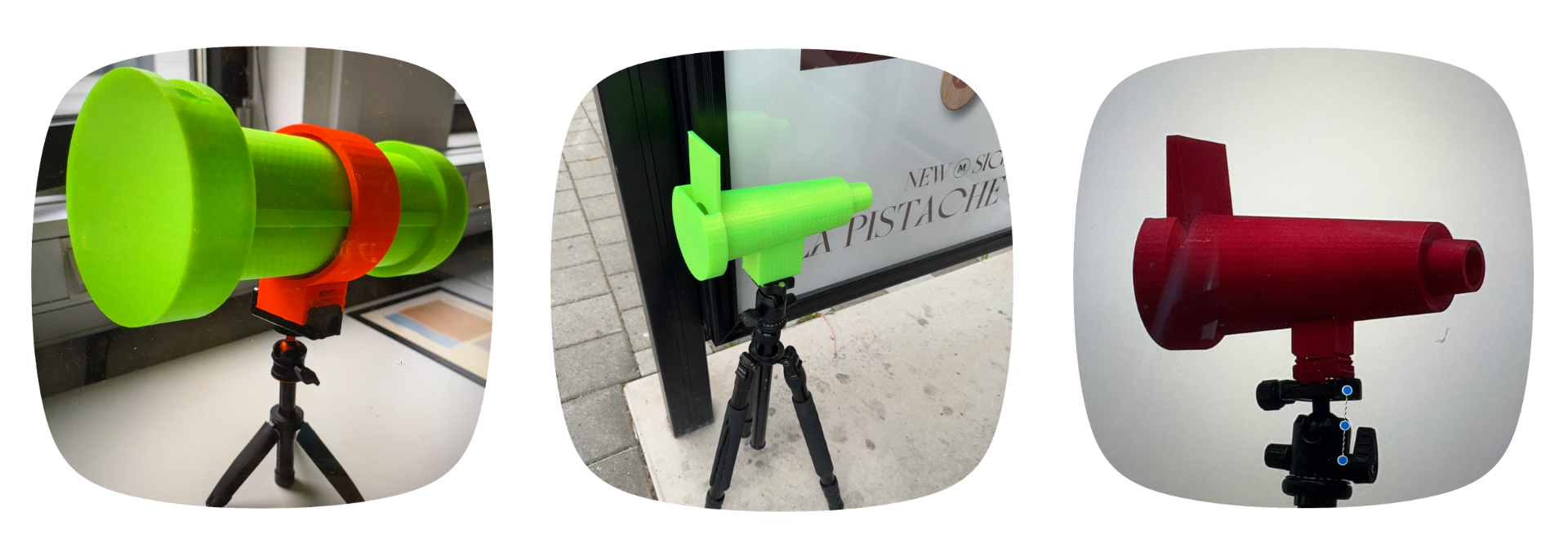
We tested our lo-fi physical prototype with our peers at the beginning to see if it could deliver the feeling of seeing augmented animals through the spyglass. We found that the spyglass was hard to hold, so we changed its shape to a cone. Additionally, we realized it's too heavy to hold in the hand, even for us, so we introduced a tripod to support the spyglass.
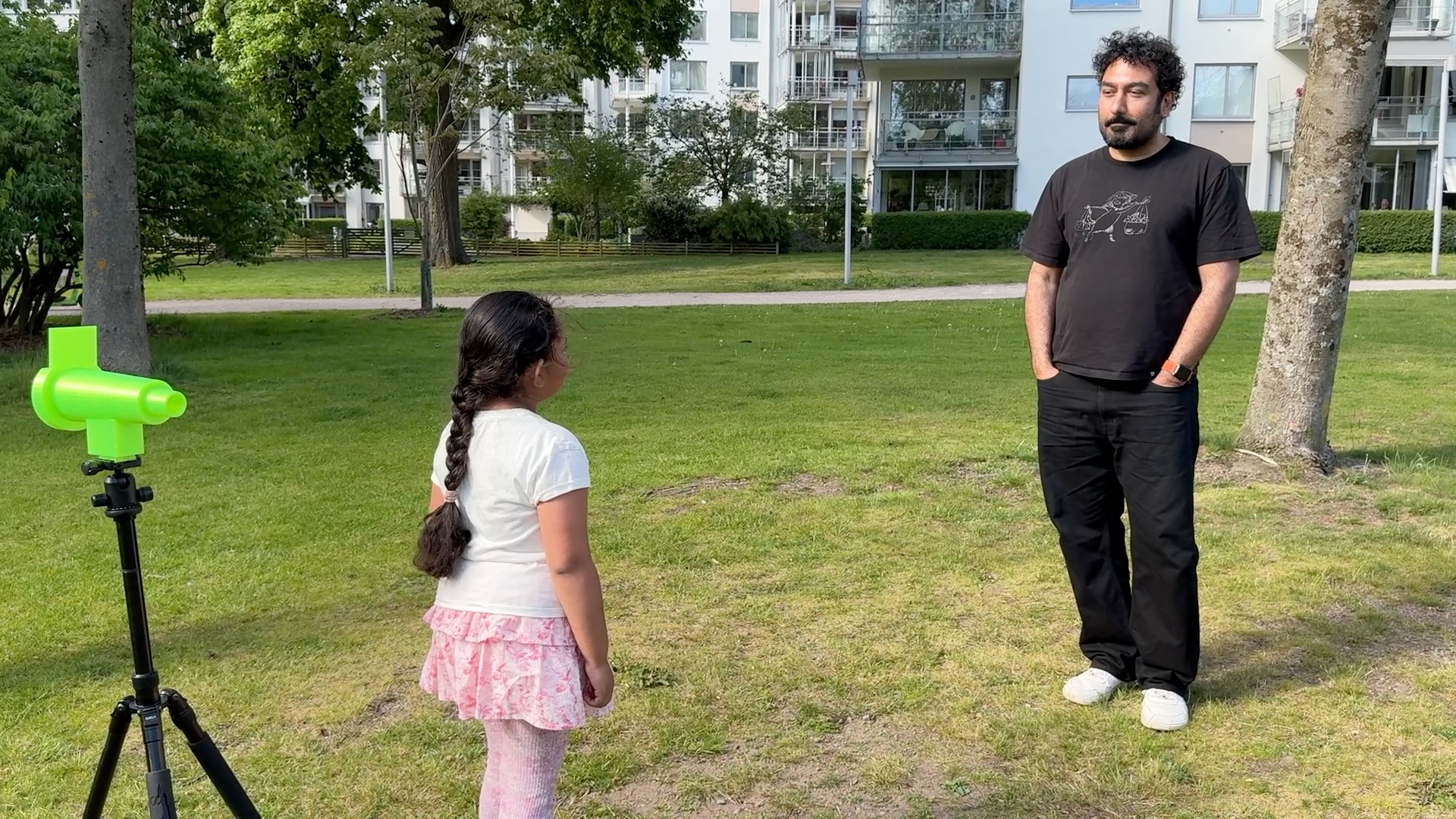
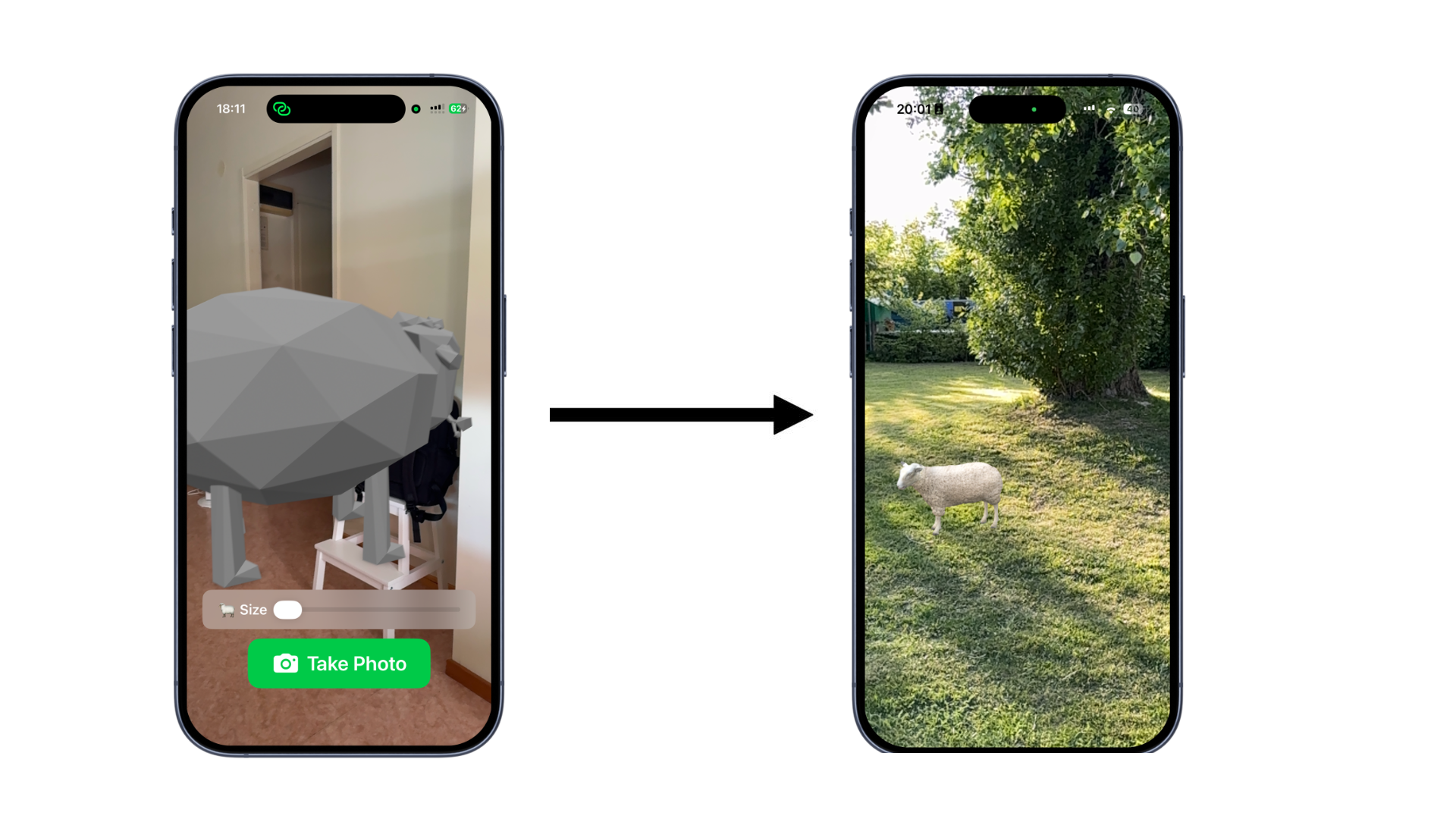
Later, once we had our concept finalized and high-fidelity props, we tested with a real user (an 8-year-old girl) to see whether the whole concept works with the spyglass and mobile application, and to guide her in a specific direction with an animal sound. From this test, we found that the mobile app's viewing area was way too wide, so we changed it to a zoomed-in view of the scene to convey the feeling of looking through a spyglass.
Iterations
We iterated on ideas, Spyglass, and mobile applications over several rounds to arrive at our final concept. Our first concept had a picture taken at the end of the animal's finding. We left it because it didn’t include the person who is on the spyglass. Also, this might be interesting for parents, but during our testing session, we noticed that kids do not look happy when taking pictures.
The hide-and-seek idea came to us later in the project during a brainstorming session with our mentor Bertil, and we were in the process of using sound as our beacon to find the animal. While we were talking and reviewing our research, the idea of using a hide-and-seek prop during gameplay came to mind. We all welcomed and added to the storyboard.
Another change we had to make in the physical prototype: the first version showed much more than the device's screen, so it did not convey the feeling of looking through the spyglass. Also, the rest of the screen was visible, which didn't feel like a spyglass, so Dylan made a version that blocks the view of the rest of the screen on the mobile device. This one we used to shoot our concept video; at the end, it broke, and the cover that blocked the mobile's view felt too soft. So, in the last version, he made it sturdier.
Similarly, the application we used underwent several iterations based on changes to the concept and the application within it. For example, the first concept had a photo feature that required a button, but we later removed it. At the end, we have a bare-bones version without any UI components because they are not accessible within Spyglass.
Experience Overview
We created three parts of the experience: first, the spyglass; second, the app; and, finally, the platform with a sound system and toy animals to hide. They joined to provide a cohesive experience for the children.
Reflection
We received praise from the client as a designer, and we delivered on time. I learned a ton about editing software like Davinci Resolve while editing and adding sound in the concept video. Another big achievement was to vibe-code for the first time and build an iPhone application using Claude AI. And it changed the philosophy I believed in. I used to think that taking help from AI would lose my originality. Now I learned not to look at it egoistically, but rather to focus on the quality of the final deliverables and the problem they solve. Which I feel is great progress as a designer.
We also didn't want to use mobile phones, as we found that parents don't like their kids using them. However, we ended up using one because creating an AI-enabled square screen is extremely expensive, and we don't have the technical ability to do so. This also forced us to compromise on the spyglass design; we could make it look more like a real spyglass.
We assumed we would be able to find children to test our design, but we couldn’t. So we tested with only one child from our personal network. Which made me insecure about the concept.
Additionally, we only proposed a wheelchair-friendly pathway to the platform, and the tripod supports vertical position changes. Similarly, proposed headphones for the hearing-impaired kids. But we haven’t done much for visually impaired kids.
One last note, philosophically, I liked using AR animals to teach kids about animals and the sounds they make, which is speculating but I feel that if everyone uses technology to teach about animals, we won't need zoos that trap them.