Research
Our research includes interviewing current passengers at the stations to better understand the problems they face. Observing in the Stationsstaden area to list the facilities. Using Google reviews to collect reviews on this and other nearby stations, and finally going through the planning documents of Stationsstaden.
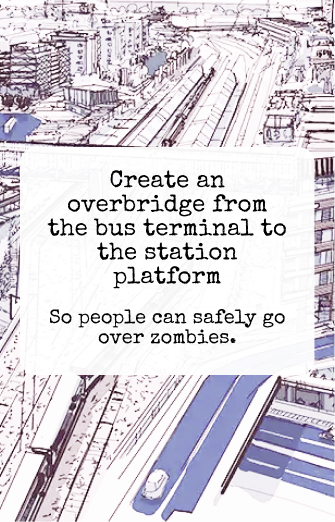
In our interviews in the station area, we found that people's needs are basic, such as better food options, free toilets, another overbridge, and a closer connection to the bus. Someone told us during the interview that they missed the train because there was no overbridge linked to the platform. So later I created a mission card to build an overbridge from the bus terminal to the platform.
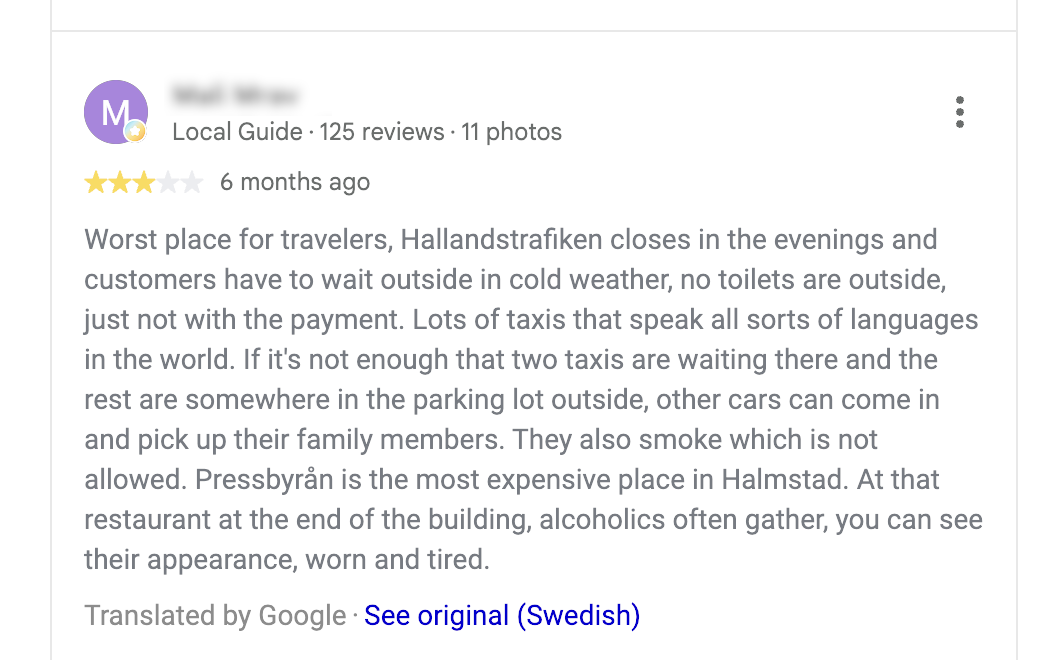
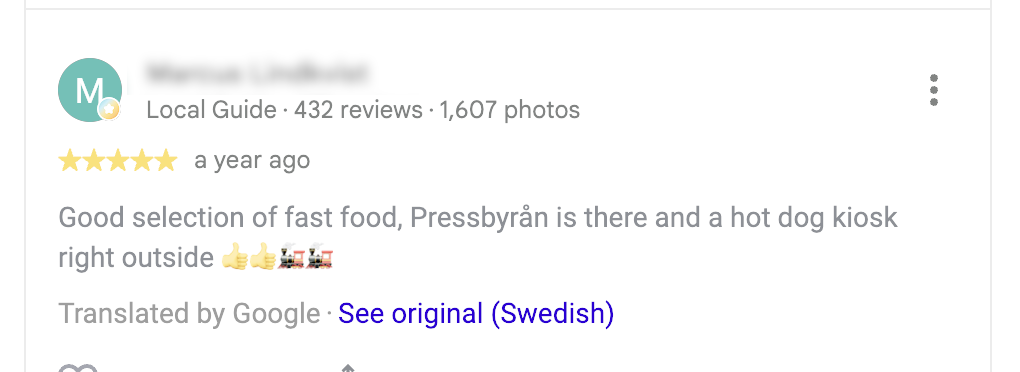
We found similar issues in Google reviews. The passengers want the waiting room to be kept open during cold nights, want more food options, and some people think this is enough. But in general, it was always basic needs in the station.
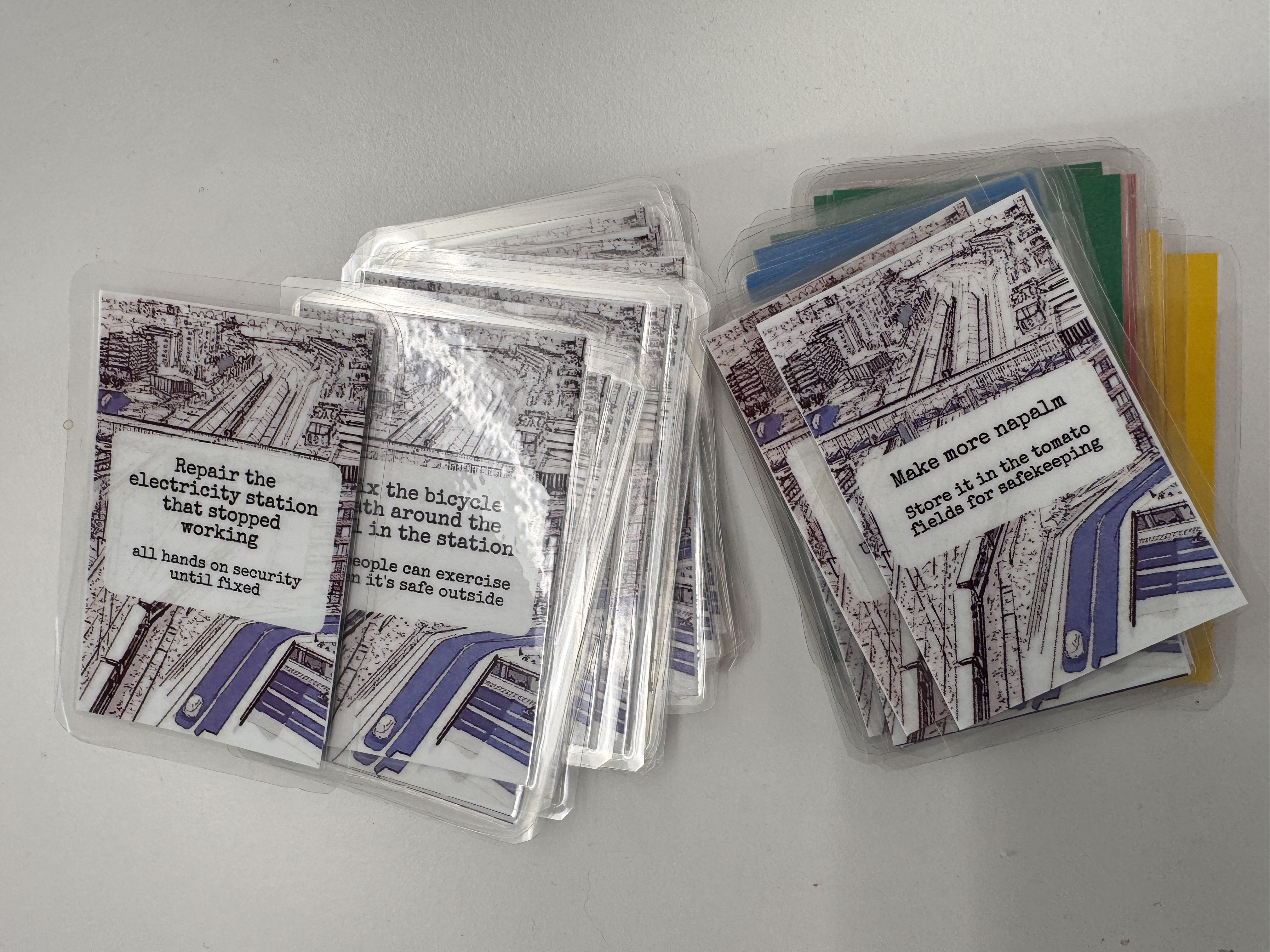
We used the data we gathered from reviews, observations we made at the station, and the Stationsstaden planning website to create the game missions. Like “Fix the bicycle path around the wall in the station”. We thought about a zombie attack scenario and how it would affect day-to-day activities, and we narrated accordingly.
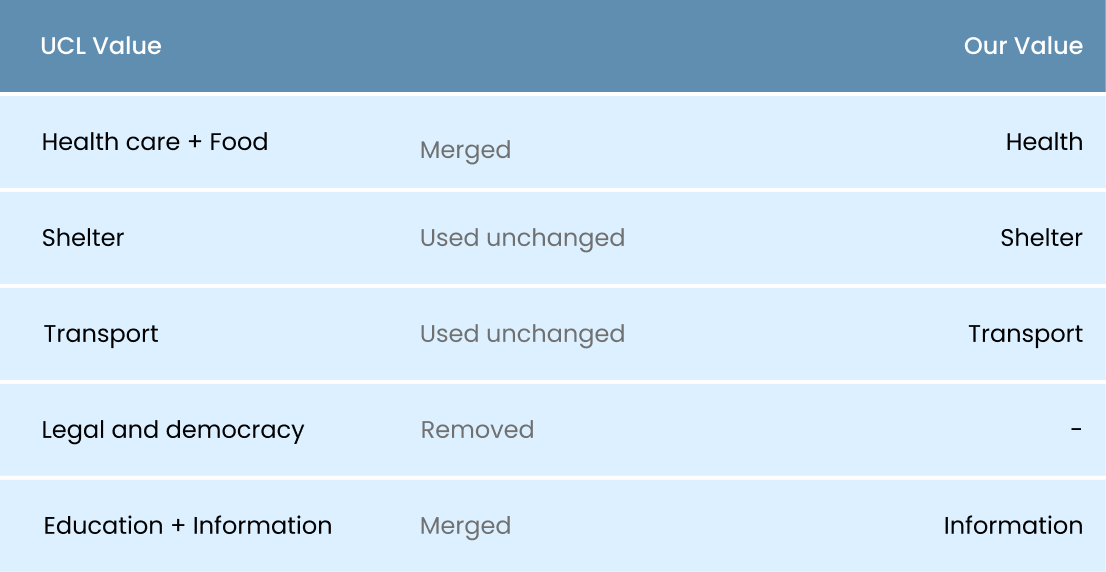
These data also led us to the basic needs. After trying different values across a couple of versions of the game, we extracted values from some missions. Because these values overlapped, choosing a negative one was difficult. We did this three times, and every time we found it hard to use negative values. That's why, in the end, we decided to use universal basic needsas a base for needs. These are Health care, Education, Legal and democracy, Shelter, Food, Transport, and information. We merged them into 4, as per the following table.
Design Process
Iterations
We have iterated on the game quite a couple of times, including 3 major versions. Because at first we wanted to work with the value Justice. So we decided to choose between an individual train seat and a station upgrade. But in that version, when we tested with other people, we found that they always preferred helping a group over helping an individual. Because this way they can help more people in the game.
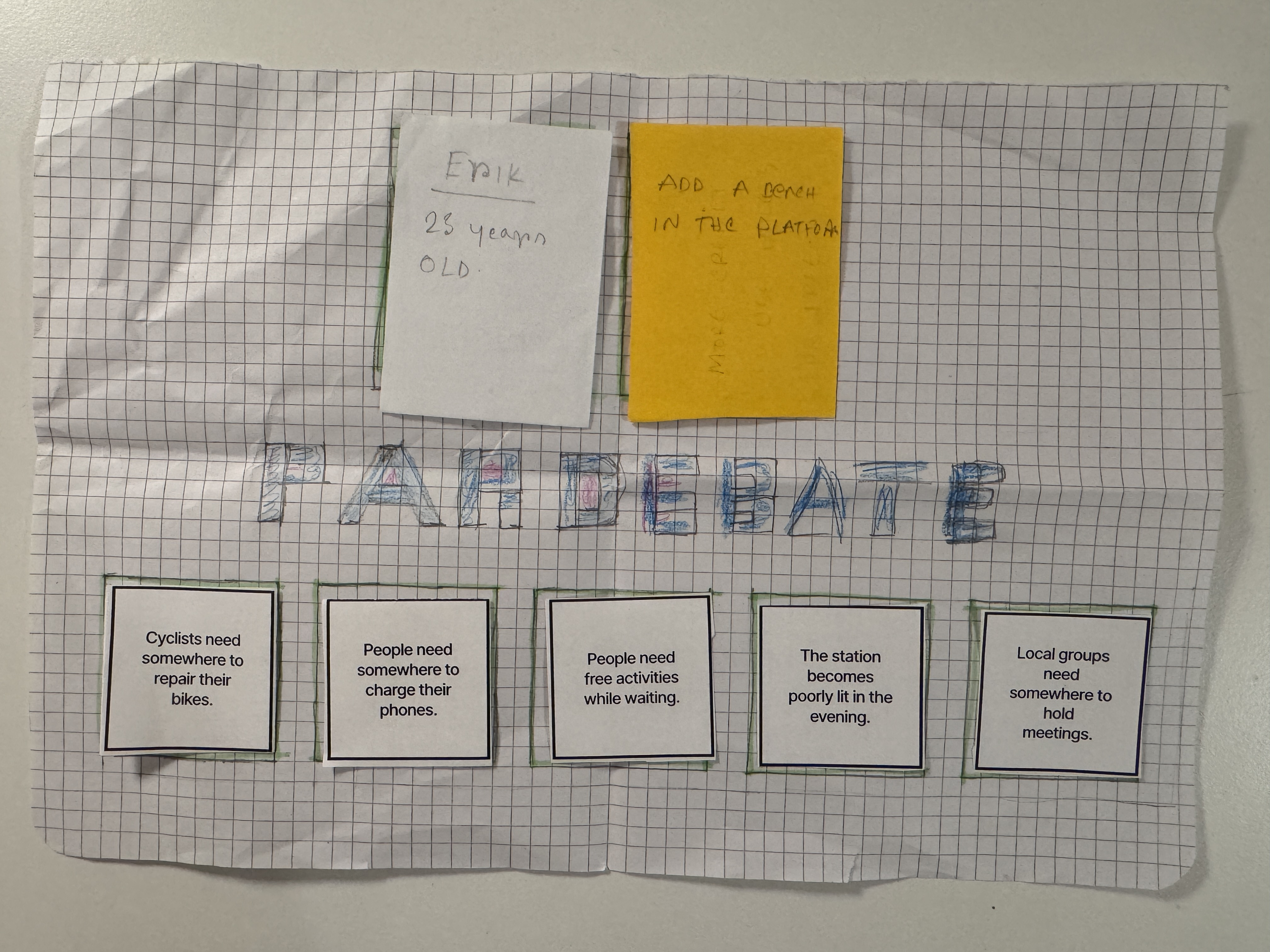
We also had another version that wasn't based on a zombie attack. It was just about choosing an upgrade for the station. This narrative didn’t have the urgency in the storytelling or life threats to act fast. It was just an upgrade-a-station game. Back then, we didn’t have the meeples to make the gameplay strong, so the game was only updating the scoreboard, which was boring in my opinion.
Testing
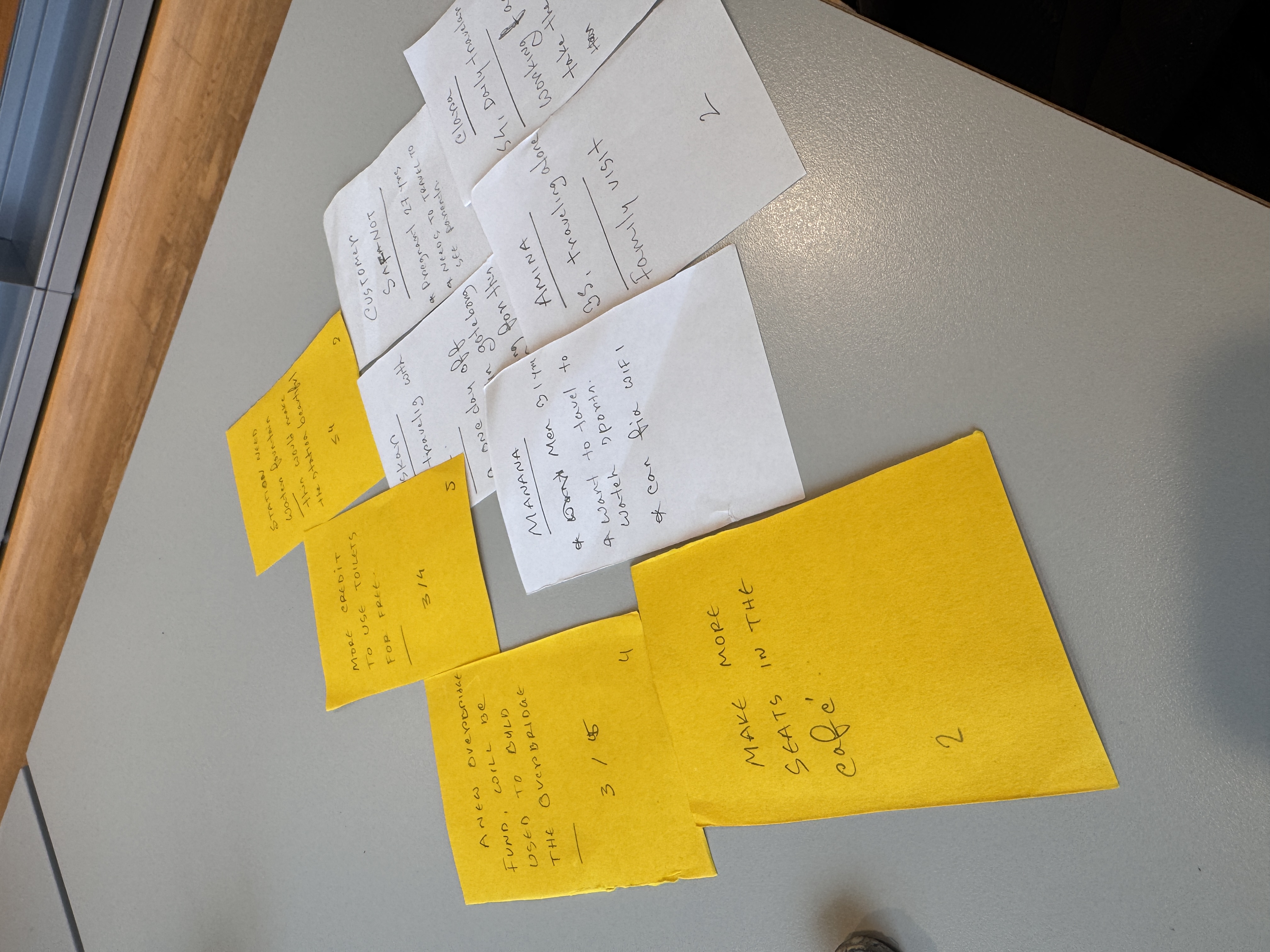
We tested three major versions of the game with people from other teams in the class.
The first version didn’t work because it had two different types of choices, as I mentioned in the iterations section. But there were some helpful cards that explained the scenario, which didn’t always align with the choices. We kept those scenarios, and later used them as to-dos.
The second version also had many smaller versions, but essentially it had a scoreboard to maintain the balance. And the task/mission had values on the back side, like this version. This was well received among peers, but we received feedback that a budget might help make this a facilitation tool for city planners. We tried to add budget to this version, using money and space as budget items. We failed. But we succeeded with using people as budget. Like a monetary budget, the number of people decreased. And later, we added the zombie narrative from one of our very early versions.
Speculative design studies
Speculative design studies include an understanding of speculative and critical design. Each student found some sample artifacts online, and we discussed them as a group. During this process, I came to understand that the purpose of critical design is to engage audiences and prompt them to reflect on the design's subject. This also led us to look into creating artifacts rather than a game as a speculative design project. We kept trying that for some weeks, and during the game-making process as a prototype, we realized that a game could be an artifact as well.
Role Play in Participatory Economy Value Fiction
We participated in a role-play seminar, where all of us in our class participated in a fictional play. We played different roles in a parecon society, where there are no paying clients, economic life is some form of collective, and every proposal disclosed its benefits and resource use. Then we played through different scenarios. Like a station waiting room, or shared mobility desk. This taught us to think about a differently valued society and how it may work. Also, it helped us give the role of council to the players.
Game making as prototype
We made the game a speculative design artifact because a game invites people to play and reflect on the situation without discussing it. They can continue thinking about future scenarios and communicate and solve problems together in a non-capitalist society. Without the game, the shift in thinking is hard to create.
Games give us the option to narrate a worldview we want players to inhabit. We let them figure out the problem rather than us designers solving it for them.
Also, it gives us a way to show the conflict without putting them in real danger, in this instance, in a zombie environment. While they are safe, the game's outcomes can vary from player to player. It could be an outcome we never expected.
Impact Vision and Design Fiction
We also participated in two design workshops, where we wrote stories about scenarios. Later, we all participated in a model world-making activity in which our scenarios came to life.
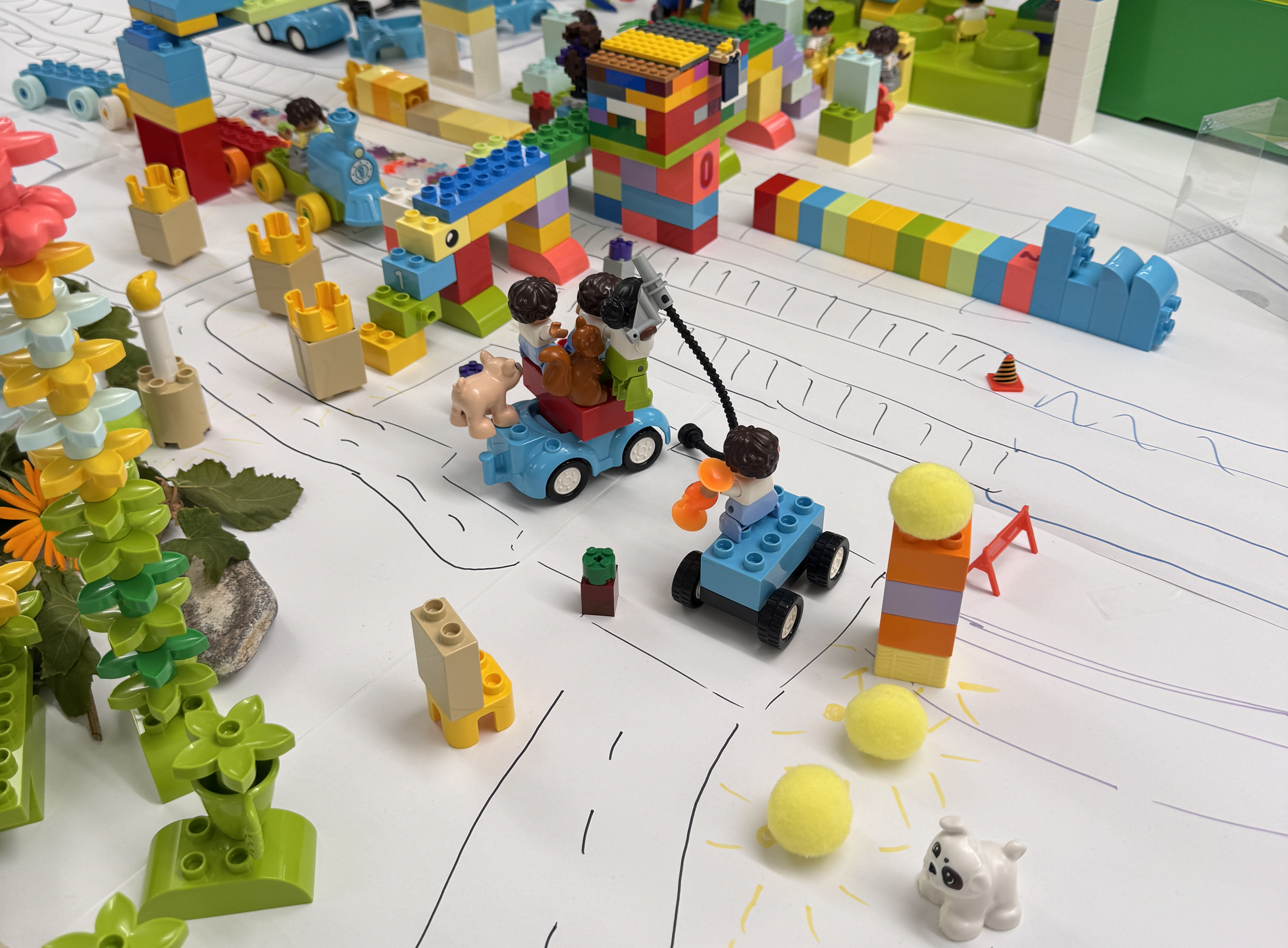
Later, we created design fiction, in which we were given a future story and had to think it through and identify frictions and missing parts in the design.
These two exercises taught me that people find unexpected things during testing. We found that in our test as well, people found problems with the old version. There were many questions about the gameplay. Because we haven’t written it yet.
The Game
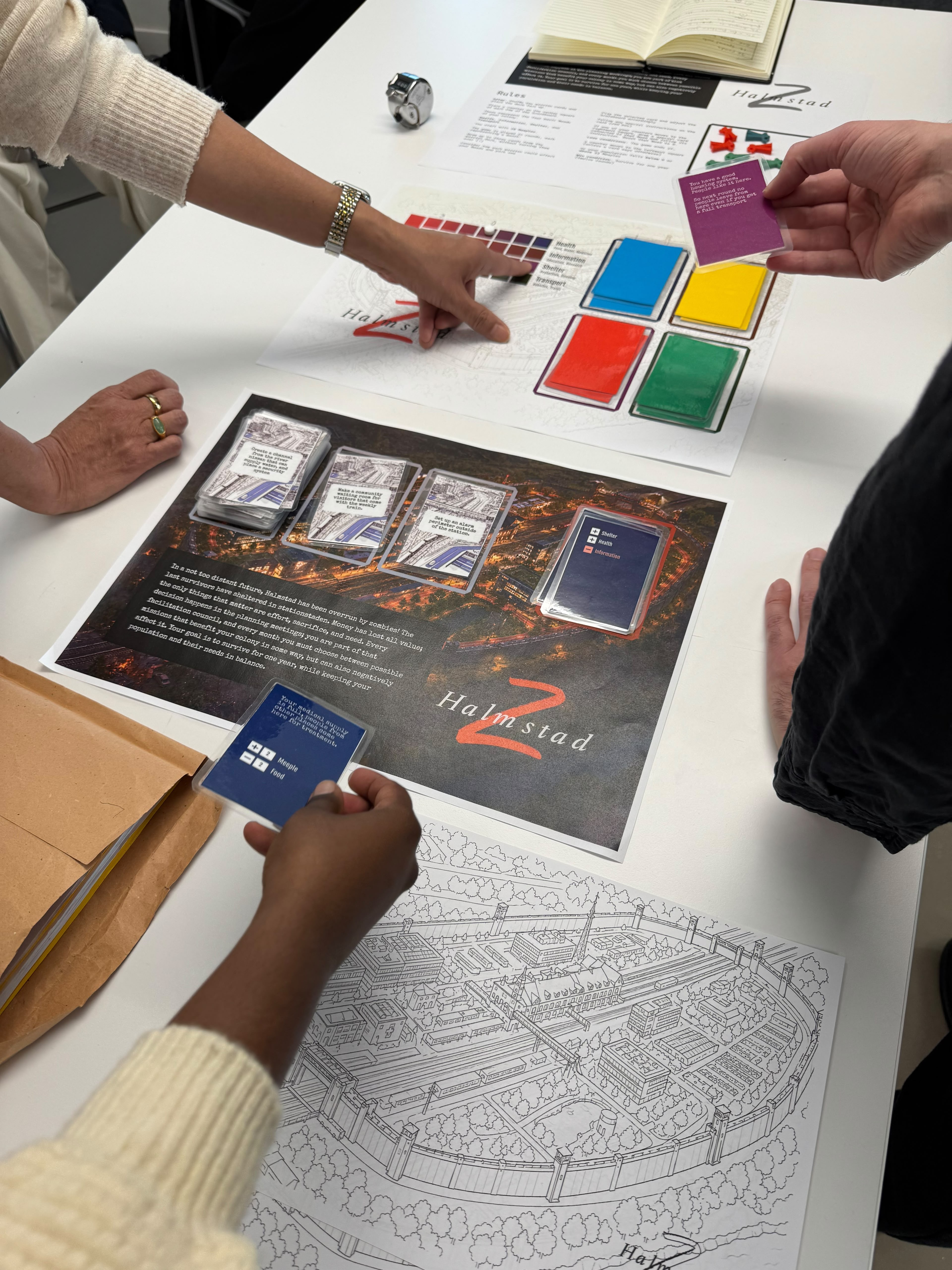
The game is set in a future timeline when zombies attacked the city of Halmstad. All of its people fled, except for a few who took refuge in Stationsstaden and are trying to survive. Players, as council members, must prioritize missions that help these people survive while zombies roam outside the station. In the game, these people are represented by the meeples, and each game starts with 10 Meeples.
Any number of players can play the game. The game starts with someone shuffling the mission cards and placing the top three cards face up on the game board. The group considers how each mission could affect their needs, and selects one mission.
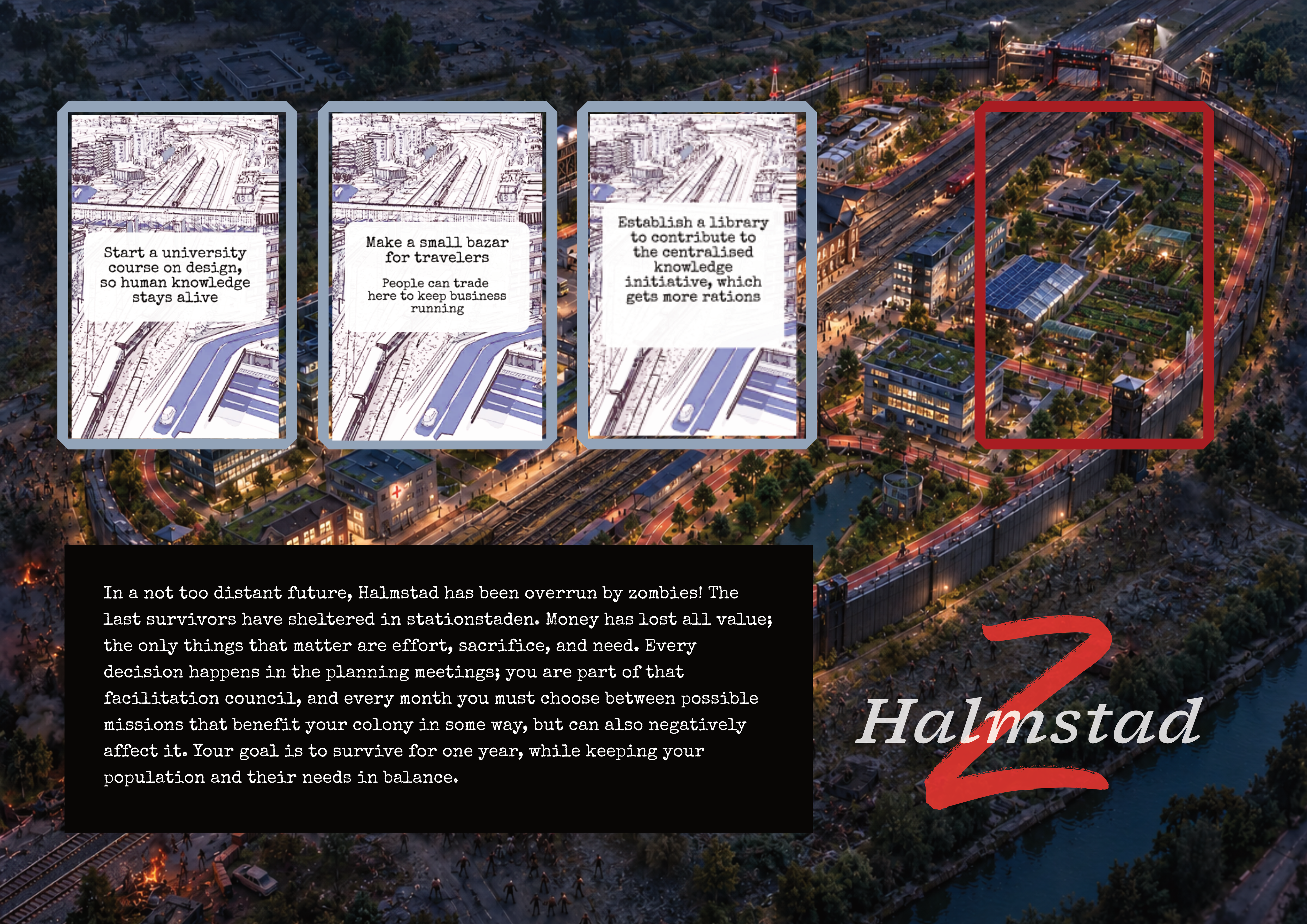
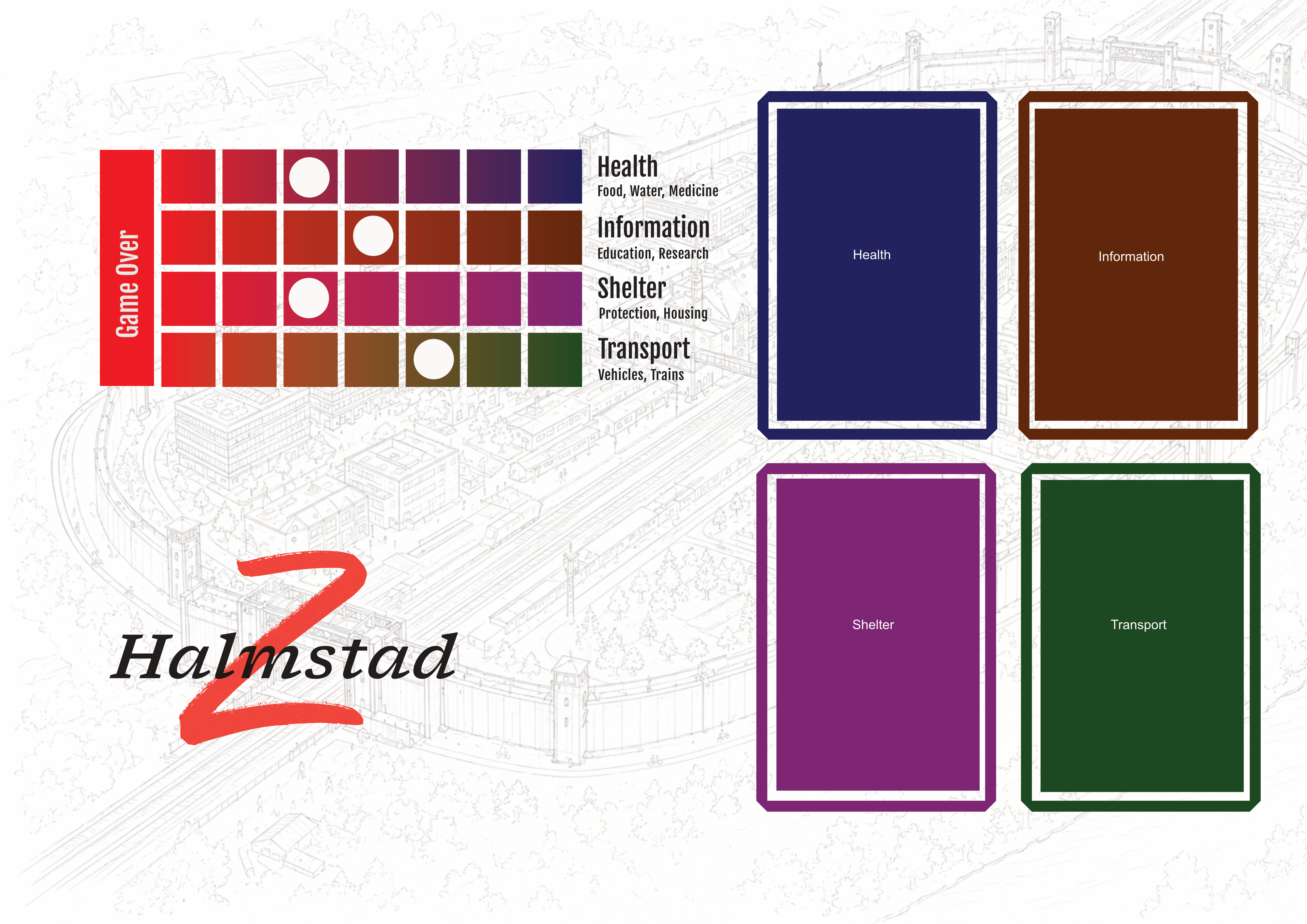
Once the group selects a mission to continue, they turn to the other side of the card, where there are two positive values and one negative value. The group then adjusts the scoreboard by moving the buttons to the right or left. The scoreboard is a 7-column board, where points could range from -3 to +3. Each row represents a need, and there are 4 needs in total (Health, Information, Shelter, and Transport). A big part of the game is keeping these needs in balance, which means staying between -3 and +3.
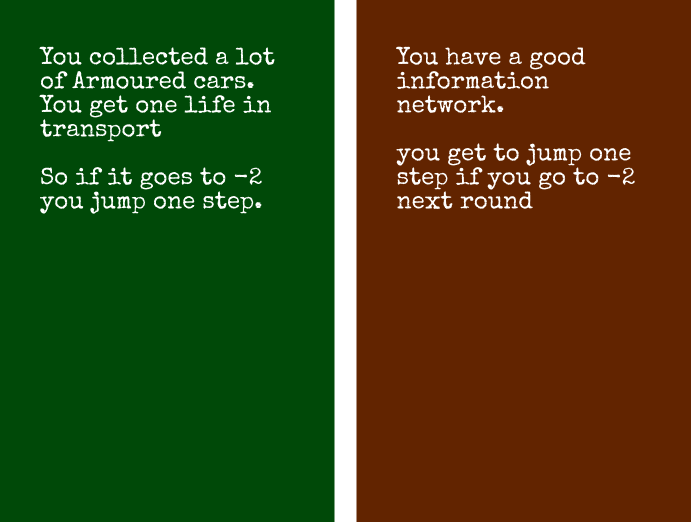
Sometimes the selected mission card has a special instruction on the back. After updating the scoreboard, the group updates those, e.g., moves meeples or keeps the card next to the scoreboard and waits for any event, like scoring the lowest. Then that card might save them and keep the game going.
After a couple of rounds, if selecting cards makes them go all the way to +3 in any specific category, for example, health, then the group receives the special card. It normally adds a bonus, and sometimes it can help to lose as well. For example, since they are doing very well in terms of health, 4 new people came here for medical purposes, which would increase the number of people at the station, which might not be so good. Anyway, once the group does what the card says, the button resets to 0 on the scoreboard.
The game loosely follows Parecon's planning meeting, where council and worker members decide on production priorities for the following year. But in gameplay, the group decides on missions monthly, so we can have 12 rounds over the year. Each game also finishes in 12 rounds. This totals 36 mission cards. The game also includes 16 special cards, with 4 for each need.
The game ends if a counter moves to the leftmost square labeled "game over," outside the balanced need. Another way to lose is if the game's population falls below 4 or exceeds 12 (represented by meeples). Because then it's not sustainable in the station.
And winning is surviving for twelve rounds, keeping the needs in balance.
Connection to Participatory Economy
As we already know, the gameplay is inspired by the participatory planning process described on the parecon website: “Before the start of every new year, every workplace, household and federation council participate in an annual planning procedure...”. And the planning procedure occurs over a series of rounds. We were inspired by this, and it sets up our twelve rounds in the game. We just chose yearly planning to support our game. A shorter timeframe invites conversations among the players.
We also chose a value to uphold, as Parecon is based on 6 values. We chose efficiency among those. According to the Parecon website, efficiency is “To use our scarce resources and human talents wherever they return the greatest increase in human well-being.” We were motivated by the scarce-resource aspect, which is why the players have to choose one mission from three based on the scoreboard's needs: Health, Information, Shelter, and Transport. Otherwise, if resources were available, they could choose all the missions.
However, we haven’t specified in our backstory that the game world's society is a participatory economy. But we made it so that when prioritizing missions, players don’t have to think about capitalist concepts like return on investment and mission costs. While we cannot think of any scenario in which we don't think about money, removing this capitalist view and that way of thinking would bring it closer to Parecon.
So, finally, we can argue that using ideas from participatory planning, keeping resources in balance, removing the need for capital, and introducing a zombie-attack scenario makes it a speculative design project that uses Stationsstaden as a base.
Reflection
This project changed my view on speculative design. My understanding was that speculative design involves creating designs for the future or other critical designs that invite conversation. But after going through this project, my view of the artifact changed. Because a game can provide a way to create an alternative universe that I never thought of before.
We wanted to make it a facilitation tool because working in corporate made me think of games as mostly a facilitation tool. However, to become a speculative project, this was not important. Also, to make it a successful facilitation tool, it needs more work. We will have to create systems that would let people make their own version of the game, which we had in mind but never managed to build.
There was a breakthrough moment when I finished writing all the missions myself. Before that, we were talking a lot about game mechanics and how they weren't fitting, but the moment we had the narration, the mechanics fit right into place. Understanding that narration and creating stories are an important part of game development, which we read about, but seeing this in practice for the first time.
The project management aspect was also not very good. There were three weeks when we kept circling back to the same discussion. We changed the topic, the story, and the values. But any values should work with this game, which we didn’t understand back then. We underestimated the power of narration in the gameplay.
One thing that bothers me is that the project is not inside a participatory economy. We could easily make it into one. We haven’t gone that route because none of us are economists, and without one on the team, it's not a good idea to make a game. At least that's what I got from Reddit game discussion boards. We used some features of that economy mainly to prioritize and keep needs in balance. But we should’ve used more.
While we were happy to find out from testing with different people that the game is fun and enjoyable, and I saw them decide collaboratively, there is still room for improvement, like the number: should we do 4 to 12, because this range is too small for a place like Stationsstaden. Maybe we can make it 40-120 in that case. And each meeple on the board will represent 10 people. So we will keep working on these issues and keep updating the game.
Thank you for reading.